Monday, February 23, 2009

THE LIFE OF ARTHUR PINK

ARTHUR AND VERA PINK- JULY 20, 1928

Some history and a personal testimony by W.F. Bell
.

Arthur W. Pink was born in Nottingham, England in 1886, and died on the remote Isle of Lewis, Scotland in 1952. His life and ministry were unique in many different ways. Though known more today than when he lived, Pink was a careful and serious student of Scripture, and a gifted writer who is loved by many all over the world. I have before me the first book I obtained by him, Gleanings in Genesis, bearing the date 1970, which was a gift from a friend. In 1972 or 1973, after my teaching at a certain church, someone approached me, saying, "You must be a Pink Calvinist." So I guess I was, and still am! I owe much, under God's blessing, to the written works of Mr. Pink, and truly rejoice in his life's testimony to the truths of God's grace, the trustworthiness of Scripture, and the glory of Christ. He was eccentric in some things, but some of God's best servants have been, so we do not fault him in this, remembering James 3:2.

In 1976 I visited Morton's Gap, Kentucky, where Arthur Pink and his wife Vera lived briefly in 1929-1930. I actually met a couple who had known the Pinks personally, Mr. and Mrs. Will Talliaferro (aged, but with good memories of Pink). Brother Talliaferro gave me a copy of a letter Pink had sent him in 1924 (from Philadelphia), plus loaned me his copy of Pink's book, Why Four Gospels? The letter wound up being published as the very first letter in Banner of Truth's book, Letters of A. W. Pink (1978). The book was republished here in Canton, Georgia in January 1977, but with an Appendix stating that Pink had later changed his views on "Dispensationalism," from that revealed in the original book, which was first published in 1921. This book was subsequently reprinted by Scripture Truth Book Company, Fincastle, Virginia, but lacking the Appendix and any reference to Pink's change of views from the original publication. Despite this, Pink's book on Why Four Gospels? is still a worthy treatment of the subject, and it still amazes us that in this book and his other early works, Pink reveals a great familiarity with Scripture, the writings of others, and a gifted writing ability. Anyone who has read him even scantily knows that he breathes Scripture throughout his writings.

The last years of Pink's life were spent in isolation in the Outer Hebrides in the far northwest of Scotland. This he desired, and we must praise God for the "Providence" that led him there. He was particularly devoting most of his time to editing his magazine, Studies in the Scriptures (published from 1922-1953), and corresponding with the many hundreds who wrote him seeking counsel. We are certainly not losers in Pink's "separating" himself from mainstream churches and ministry, though we must not seek to emulate him in this. Even he would say we should not. So, let us briefly give here some of his own words on a few subjects, hoping this will "whet your appetite" for more and more of Mr. Pink:

GLORYING IN THE LORD
"He that glorieth, let him glory in the Lord" (I Cor. 1:31). This shows that ministers of the gospel need to be especially careful not to glory in their performances, but instead to give thanks to God for their success: all must be credited to His enabling and blessing. They must not glory in their abilities, attainments or achievements, but only in the Author and Giver of the same....We desire neither to be unsociable nor to live the life of a hermit, but we are "not our own," and are resolved by grace to devote the whole of our energy in an endeavour to feed Christ's lambs and sheep. We highly value such a privilege and honour, and are jealous of anything which tends to encroach upon the same. We are deeply thankful that the Lord has brought us apart from "the strife of tongues," and has so graciously provided us with a "peaceable habitation" (Isa. 32:18). Not that we urge anyone else to follow our example. Others must take their place on the firing line, and each soul should seek to perform his or her duty in whatever position Providence has assigned them. (Annual Letter, 1951, Studies in the Scriptures)

NARROWNESS AND BROADMINDEDNESS
There should be a happy medium between sectarian narrowness and the world's "broadmindedness," between deliberately compromising the truth and turning away from some of the Lord's people because they differ from us on non-essentials. Shall I refuse to partake of a meal because some of the dishes are not cooked as I like them? Then why decline fellowship with a brother in the Lord because he is unable to pronounce correctly my favourite shibboleth?....As good old Matthew Henry said, "The consideration of being agreed in greater things should extinguish all feuds over lesser ones." (1935, Studies in the Scriptures)

GOD'S SOVEREIGNTY AND CHRISTIAN SERVICE
If God has determined before the foundation of the world the precise number of those who shall be saved, then why should we concern ourselves about the eternal destiny of those with whom we come into contact? What place is left for zeal in Christian service? Will not the doctrine of God's sovereignty, and its corollary of predestination, discourage the Lord's servants from faithfulness in evangelism? No; instead of discouraging His servants, a recognition of God's sovereignty is most encouraging to them....What is God's remedy for dejection at apparent failure in our labors? This -- the assurance that God's purpose cannot fail, that God's plans cannot miscarry, that God's will must be done. Our labors are not intended to bring about that which God has not decreed. (The Sovereignty of God, first published 1918, reprint 1969)

Editor's note:
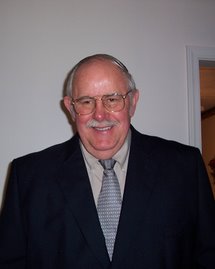
I thought it would be good to present some biographical information about Arthur W. Pink. He was a remarkable servant of Christ whose greatest influence came after his death in 1952. Almost all of his books were written from material in his magazine Studies in the Scriptures. My late friends, Lawrence and Amy Nelson of Venice, Florida, founders of the Chapel Library, had some personal correspondence from Pink, as well as some full sets of Studies in the Scriptures in their original format. They reflected on fond memories on my visits to them in the 70's. Pink's works have been influential among theologians, ministers and people in the pew. You can find almost all of them online, since none were copyrighted. He was a gifted preacher, but for the final 12 years of his life, he lived in isolation in Stornoway on the Isle of Lewis, Scotland, studying, praying and writing. We have the fruit today of that labor Yet, if you search the internet, you will not find over 2-3 photos of this man. cw

Thursday, February 12, 2009

THE RIGHT BEGINNING-ARTHUR W. PINK


How much depends upon a right beginning. If the foundation be faulty, the superstructure is insecure; if the babe be undernourished the child will be unhealthy; if the child grows up uneducated, the man is handicapped for life. Doubly so does this hold good in spiritual matters. If the preacher ignores the Law and presents only the Gospel, his “converts” will be as worthless as wheat sown upon ground which was neither plowed nor harrowed. If the babe in Christ be erroneously indoctrinated, he is disqualified from fighting the good fight of faith. If the local church fails to maintain a Scriptural discipline, and instead spends its energies in home and foreign “missions,” then disastrous will be the outcome. In like manner, if we enter upon a new year without beginning it properly, then we cannot expect to enjoy spiritual prosperity therein.

“In the beginning GOD” (Gen. 1:1). Thus opens the Sacred Scriptures, and since they are of Divine authorship what other frontispiece could they possibly have! This is the very essence of their inspiration: “Knowing this first, that no prophecy of the Scripture is of any private interpretation (human origination), for the prophecy came not at any time by the will of man: but holy men of God spake moved by the Holy Spirit” (2 Peter 1:20, 21). Not to human skill nor to human goodness is the Bible to be attributed but rather to the wisdom and superintendence of the Spirit is it to be ascribed. So, too, of the contents of the Scriptures: “In the Beginning God”—He is the Alpha as well as the Omega of their subject matter. From Genesis to Revelation He has the precedence and the pre-eminence. The precepts, the promises, the predictions of Holy Writ are alike prefaced with a “thus saith the Lord.”

“In the beginning GOD” is the explanation of salvation. Alas that this is so faintly recognized and so feebly insisted upon today. True, that in most circles reputed as orthodox it is still allowed that the planning and providing of salvation is of the Lord, but when it comes to the actual reception and enjoyment thereof, proud man determines to place the crown of honour upon his own head, by insisting that that which made him to differ from the unsaved was his willingness to accept Christ. But from whence did such willingness originate? Certainly not from mere nature, for the heart of every unregenerate person is stubbornly steeled against its Maker. God must take away the heart of stone and impart a heart of flesh before there will be any yielding to the gracious influences of His blessed Spirit. The fact is that we love Him because He first loved us. Had He never chosen us to be His sons, we should never have chosen Him to be our God.

“In the beginning GOD” is the essence of all genuine piety. The fear of God and the love of God are the springs from which all true yielding of ourselves unto Him proceeds, and where there is not that, real spirituality is absent. Hence we read of the Corinthian saints that they “first gave their own selves to the Lord” (2 Cor. 8:5)—for the Lord wants no man’s money till He first possesses his heart. Until we have surrendered ourselves to the authority of God our profession is worthless and our religion is vain. Hence it is that the hortatory section of the first Epistle of the New Testament opens with, “I beseech you therefore, brethren, by the mercies of God, that ye present your bodies a living sacrifice, holy, acceptable unto God, which is your reasonable service” (Rom. 12:1). It is here we must begin, and it is to here we must constantly return.

“In the beginning GOD” was the keynote of the life of Jesus Christ, and throughout the whole of His course everything was in perfect keeping therewith. He could say, “I was cast upon Thee from the womb: Thou art My God from My mother’s belly” (Psa. 22:10). Herein we perceive His uniqueness, for none other could make such a claim. From the very first breath that He drew, His whole being was completely yielded to God. Hence it was that as a Boy of twelve we hear Him exclaiming, “Wist ye not that I must be about My Father’s business?” (Luke 2:49). “The LORD is the portion of Mine inheritance” (Psa. 16:5), was His unqualified testimony, and therefore could He affirm, “I have set the LORD always before Me” (Psa. 16:8). Even in the midst of His crucifixion agony He cried, “My God, My God,” and into His hands He trustfully committed His spirit, assured that His soul should not be left in Hades nor His body suffered to see corruption.

“In the beginning GOD.” Is not this the word we particularly need to take unto ourselves and lay to heart as we enter upon a new year? Should we not begin by solemnly renewing our covenant with God and consecrate ourselves afresh to Him? His claims upon us are paramount: gratitude for His countless mercies calls for nothing less. Review the past, my reader: can you discover any cause for regret whenever God was given the first place in your life? Ah, is it not because other things were allowed to displace Him from the throne of your heart that you now find most occasion for sorrow and shame? Then should we not seek to profit from these disastrous lapses and prevent their recurrence? And how can we do so but by contritely confessing our sinful failures and by begging Him to come in and sup with us afresh.

“In the beginning GOD.” Is not this our desire and resolve as we enter upon a new cycle of time? Should not I, and you, my reader, make this our motto for 1940—that we prayerfully determine to acknowledge the Lord in all our ways; to embark upon no undertaking (great or small); to enter into no fresh relationship; to essay no task—without first seeking God’s help and blessing? Let, “in the beginning God,” characterize each fresh day by our turning to Him from whom all our help comes. In perplexity, in sickness, in sorrow, let us turn to God first, and not to human counselors, doctors, or loved ones. Yes, and when we have sinned, let us promptly and penitently seek the face of Him who delights in mercy. And should this be the year when death sends us a solemn summons to depart hence, let us submissively place ourselves in His hands and then we shall “fear no evil” as we pass through the valley of shadows, and in a far grander sense will it then be true, “in the beginning (of our new experience) GOD,” for “absent from the body, present with the Lord.”


Originally edited by Emmett O'Donnell for Mt. Zion Publications, a ministry of Mt. Zion Bible Church, 2603 West Wright St., Pensacola, FL 32505. www.mountzion.org


Saturday, January 31, 2009

MY GOD WILL HEAR ME- CHARLES SPURGEON


"My God will hear me" (Micah 7:7).
Friends may be unfaithful, but the LORD will not turn away from the gracious soul; on the contrary, He will hear all its desires. The prophet says, "Keep the doors of thy mouth from her that lieth in thy bosom. A man's enemies are the men of his own house." This is a wretched state of affairs; but even in such a case the Best Friend remains true, and we may tell Him all our grief. Our wisdom is to look unto the LORD and not to quarrel with men or women. If our loving appeals are disregarded by our relatives, let us wait upon the God of our salvation, for He will hear us- He will hear us all the more because of the unkindness and oppression of others, and we shall soon have reason to cry, "Rejoice not against me, O mine enemy!" Because God is the living God, He can hear; because He is a loving God, He will hear; because He is our covenant God, He has bound Him- self to hear us. If we can each one speak of Him as "My God," we may with absolute certainty say, "My God will hear me." Come, then, O bleeding heart, and let thy sorrows tell themselves out to the LORD thy God! I will bow the knee in secret and inwardly whisper, "My God will hear me."
(From Faith's Checkbook for January 31st)

Thursday, January 22, 2009

CHRISTIAN LIBERALITY- C.H. SPURGEON


"Blessed is he that considereth the poor: the LORD will deliver him in time of trouble" (Psalm 41:1).

To think about the poor and let them lie on our hearts is a Christian man's duty; for Jesus put them with us and near us when He said, "The poor ye have always with you." Many give their money to the poor in a hurry, without thought; and many more give nothing at all. This precious promise belongs to those who "consider" the poor, look into their case, devise plans for their benefit, and considerately carry them out. We can do more by care than by cash, and most with two together. To those who consider the poor, the LORD promises His own consideration in times of distress. He will bring us out of trouble if we help others when they are in trouble. We shall receive very singular providential help if the LORD sees that we try to provide for others. We shall have a time of trouble, however generous we may be; but if we are charitable, we may put in a claim for peculiar deliverance, and the LORD will not deny His own word and bond. Miserly curmudgeons may help themselves, but considerate and generous believers the LORD will help. As you have done unto others, so will the LORD do unto you. Empty your pockets.
(From Faith's Checkbook for January 22nd).

Tuesday, January 13, 2009

HISTORY BOUND WITH THE DIVINE KINGDOM


by D. Martyn Lloyd-Jones

The key to the history of the world is the kingdom of God.
The story of the other nations mentioned in the Old Testament is relevant only as it bears upon the destiny of Israel. And ultimately history today is relevant only as it bears upon the history of the Christian Church. What really matters in the world is God's kingdom. From the very beginning, since the fall of man, God has been at work establishing a new kingdom in the world. It is His own kingdom, and He is calling people out of the world into that kingdom; and everything that happens in the world has relevance to it. ... Other events are of importance as they have a bearing upon that event. The problems of today are to be understood only in its light. . . .Let us not therefore be stumbled when we see surprising things happening in the world. Rather let us ask, 'What is the relevance of this event to the kingdom of God?' Or, if strange things are happening to you personally, don't complain, but say, 'What is God teaching me through this? . . . Where have I gone wrong and why is God allowing these things?' There is a meaning in them if only we can see it. We need not become bewildered and doubt the love or the justice of God. If God were unkind enough to answer some of our prayers at once, and in our way, we should be very impoverished Christians. Fortunately, God sometimes delays His answer in order to deal with selfishness or things in our lives which should not be there. He is concerned about us, and intends to fit us for a fuller place in His kingdom. We should therefore judge every event in the light of God's great, eternal and glorious purpose.

(Extracted from First Book of Daily Readings, Epworth Press. Originally in
From Fear to Faith, pp. 23-4)

Tuesday, January 6, 2009

CHARLES WESLEY'S HYMNS FOR CHRIST'S CHURCH- by CHARLES WOODRUFF


There is a little hymnbook that I have in my collection which has some very good, God honoring, hymns. I noticed that this particular book has several by the great hymn writer, Charles Wesley. The only notable thing about this is that the publisher only put the initials "C.W." for the author of Can it be That I Should Gain, and other of Wesley's hymns. Why? I surmise that the publisher, a staunch Calvinist, did not want to mention Charles Wesley by name because he and his brother John Wesley were Arminians. I am considered by some to be a narrow Calvinist; even a hyper-Calvinist. Yet I personally find it rather amusing that the publisher would publish Wesley's hymns in his compilation, but not give him writer's credit!

The hymns this man wrote speak much of a sovereign God (whether Charles Wesley fully understood that or not). He is said to have penned over 7000 songs! His songs belong to the Christian church at large, as do those of Watts and Newton, and I believe there is good evidence that the Wesley's knew Christ. Read the following hymn and tell me that this man didn't know Christ.I would find that incredible to comprehend. Most of the hymnals use only four verses of this hymn, and use the wonderful words Amazing love, how can it be, etc.., as a chorus to each verse. It has become my favorite hymn, at least for now! There are so many good ones. Let us sing God's praise and rejoice in His gift of salvation to His people!

And can it be, that I should gain
An interest in the Saviour's blood?
Died He for me, who caused His pain
For me, who Him to death pursued?
Amazing love! how can it be
That Thou, my God, shouldst die for me?


'Tis mystery all! The Immortal dies:
Who can explore His strange design?
In vain the first-born seraph tries
To sound the depths of love divine.
Tis mercy all! let earth adore,
Let angel minds inquire no more.


He left His Father's throne above,
So free, so infinite His grace,
Emptied Himself of all but love,
And bled for Adam's helpless race:
'Tis mercy all, immense and free;
For, O my God, it found out me!


Long my imprisoned spirit lay
Fast bound in sin and nature's night;
Thine eye diffused a quickening ray,
I woke, the dungeon flamed with light;
My chains fell off, my heart was free,
I rose, went forth and followed Thee.


No condemnation now I dread;
Jesus, and all in Him, is mine!
Alive in Him, my living Head,
And clothed in righteousness divine,
Bold I approach the eternal throne,
And claim the crown, through Christ my own.


Friday, December 26, 2008

WHAT MUST I DO TO BE SAVED?---COTTON MATHER


(By American Puritan, Cotton Mather-1663-1728; grandson of John Cotton, and the son of Increase Mather).

“It is impossible to ask a more weighty Question! It is deplorable that we hear it asked with no more Frequency, with nor more Agony. The Spirit of Slumber which the Poison of the old Serpent has brought upon the children of Men is to be deplored exceedingly. Awaken us out of this [terrible] stupidity, O God of all Grace, lest we perish [eternally]. My Design is to bring in a Good and full Answer to this Weighty Question, Oh! how Thankful ought we to be, for the Glorious Gospel of the Blessed God, that makes us able to Answer it! The Gospel which we have in our hands, this a Gospel of such astonishing Mystery, of such Heavenly Majesty, and of such Consummate Purity, that it can be no other than the Word of God; It must be of a Divine Original. Oh! highly Favoured People, who know this Joyful Sound! Oh! Unavoidably and Inexcusably Wretched, if we disregard it.”