Saturday, September 12, 2009

LORAINE BOETTNER ON LIMITED ATONEMENT


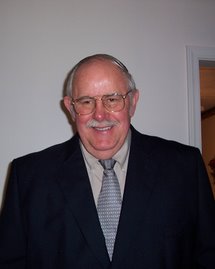
Presbyterian theologian Loraine Boettner gave us 12 volumes (perhaps more), of excellent, reflections on theological subjects. Most are still in print in 2009. His work called Roman Catholicism is a classic. Mr. Boettner, while living in Washington, DC from 1937- 1948 attended the New York Avenue Presbyterian Church where the famous future Senate Chaplain, Dr.Peter Marshall was pastor. Though I do not adhere to Loraine Boettner's view on the millennium, his book titled The Millennium is well worth reading to help grasp the standard Post-Millennial view. He was a very generous man who lived the last 32 years of his almost 89 years near his birthplace in Rock Port, Missouri. I fondly remember ordering the book Studies in Theology, a hardback which he sold "at cost". He wrote to me a nice short letter in the 1980's which I still have. (cw)

"Concerning this doctrine the Westminster Confession says:'...Wherefore they who are elected being fallen in Adam, are redeemed in Christ, are effectually called unto faith in Christ by His Spirit working in due season; are justified, adopted, sanctified, and kept by His power through faith unto salvation. Neither are any other redeemed by Christ, effectually called, justified, adopted, sanctified and saved, but the elect only' (Westminster chapter 3, section 6.)

"It will be seen at once that this doctrine necessarily follows from the doctrine of election. If from eternity God has planned to save one portion of the human race and not another, it seems to be a contradiction to say that His work has equal reference to both portions, or that He sent His Son to die for those whom He had predetermined not to save, as truly as, and in the same sense that He was sent to die for those whom He had chosen for salvation. These two doctrines must stand or fall together. We cannot logically accept one and reject the other. If God has elected some and not others to eternal life, then plainly the primary purpose of Christ’s work was to redeem the elect." (Reformed Doctrine of Predestination; Presbyterian and Reformed Publishing, Philadelphia; sixteenth printing, 1971, pages 150, 151. Used by permission of author)

(Dr. Boettner had more to say in a later, small book more focused on the atonement itself).


When we speak of the atonement as "limited" we do not mean that any limit can be set to its value or power. Its value is determined by the dignity of the person making it; and since Christ suffered as a Divine-human person the value of His atonement is infinite. It is sufficient for the salvation of the entire race, and might have saved every member of the race if that had been God's plan; but it is efficient only for those to whom it is applied by the Holy Spirit. It is limited only in the sense that it was intended for, and is applied to, particular persons, namely, for and to those who actually are saved. It is indifferently as well adapted to the salvation of one man as to that of another, thus making objectively possible the salvation of all men. But because of subjective difficulties arising out of the in­ability of fallen men either to see or appreciate the things

of God, only those who are regenerated by the Holy Spirit respond to it and are saved. God could change all human hearts by His mighty regenerating and convincing power if He chose to do so. He wrought mightily in the heart of Saul of Tarsus and made him into a new man, as He has wrought mightily in the heart of every other member of this fallen race who has been translated from the kingdom of darkness to the kingdom of light. But for reasons which have not been fully revealed He does not apply this grace to all.

The Gospel is, nevertheless, to be offered to all men, with the assurance that it is exactly adapted to the needs of all men, and that God has decreed that all who place their faith in Christ shall be saved by Him. No man is lost be­cause of any deficiency in the objective atonement, or be­cause God has placed any barrier in His way, but only be­cause of subjective difficulties, specifically, because of his own evil disposition and his freely exercised wicked will prevent his believing and accepting that atonement. God's attitude is perhaps best summed up in the parable of the marriage feast and the slighted invitations, where the king sends this message to the invited guests who, he foresees, will reject and never take part of the feast: "I have made ready my dinner; my oxen and my failings are killed, and all things are ready: come to the marriage feast," Matt. 22:4.

In reality Arminians do limit the atonement as certainly as do Calvinists. For while Calvinists limit its extent in that they say it is not applied to all persons (although they believe that much the greater portion of the human race will eventually be saved), Arminians limit its power or inherent value; for they say that in itself it does not save

Limited Atonement; Eerdmans Publishing, Grand Rapids, MI, 1941; pages 92, 93, now out of print.


Saturday, September 5, 2009

IS KNOWLEDGE AFFECTING OR AFFLICTING THY HEART?


"Reader, remember this: if thy knowledge do not now affect thy heart, it will at last with a witness afflict thy heart; if it do not now endear Christ to thee, it will at last provoke Christ the more against thee; if it do not make all the things of Christ to be very precious in thy eyes, it will at last make thee the more vile in Christ's eyes." Thomas Brooks

Saturday, August 29, 2009

HOW I ASCERTAIN THE WILL OF GOD---GEORGE MULLER


George Muller was a man with a reputation. It was a good reputation. His reputation was that he trusted God. In all the years of his orphanage in Britain, this brother, who was a Prussian immigrant, trusted in Christ. How did he know God's will? This is what he said:

1. I seek at the beginning to get my heart into such a state that
it has no will of its own in regard to a given matter.
Nine-tenths of the trouble with people is just here. Nine-tenths of the difficulties are overcome when our hearts are ready to do the Lord's will, whatever it may be. When one is truly in this state, it is usually but a little way to the knowledge of what His will is.
2. Having done this, I do not leave the result to feeling of
simple impression. If I do so, I make myself liable to great
delusions.
3. I seek the will of the Spirit of God through, or in connection
with, the Word of God. The Spirit and the Word must be combined.
If I look to the Spirit alone without the Word I lay myself open to
great delusions also. If the Holy Ghost guides us at all, He will
do it according to the Scriptures and never contrary to them.
4. Next I take into account providential circumstances. These
often plainly indicate God's will in connection with his Word and
Spirit,
5. I ask God in prayer to reveal His will to me aright.
6. Thus, through prayer to God, the study of the Word, and
reflection, I come to a deliberate judgment according to the best
of my ability and knowledge, and if my mind is thus at peace, and
continues so after two or three more petitions, I proceed accord-­
ingly.
In trivial matters, and in transactions involving most important issues, I have found this method always effective.

Friday, August 21, 2009

THE NOT NEW GOSPEL--W. F. BELL


SCRIPTURE MEDITATIONS

Romans 5:9; Ephesians 1:7; Colossians 1:20

What is it to truly preach the gospel? This question is asked by each new generation, and rightly so. So the question is now being asked again here, and we wish to give you the forthright answer from the infallible Word of God. It really comes down to mainly five things, all delineated plainly in Scripture: (1) The Cross, (2) God's Kingdom, (3) The Word, (4) Heartfelt Assurance, and (5) God's Grace. Look at these wonderful truths with us, remembering "What is true is not new." So here is the old, old story of Jesus and his love, "the not new gospel."


The Cross of Christ is central to all gospel preaching. "For the preaching of the cross is to them that perish foolishness, but unto us which are saved it is the power of God" (I Corinthians 1:18). "Because the foolishness of God is wiser than men" (v. 25). The Cross is the good news of God's gospel. It is the only hope for all bankrupt sinners. The gospel is for sinners only, and if you do not feel guilty of sin, there is nothing but "bad news" for you. "Being NOW justified by his blood" (Romans 5:9). The blood of Christ effectually saves and justifies all of the elect of God. What glorious news this is! Nothing ever told or heard by mortal man equals or surpasses this news. Christ's blood alone "redeems" us (Ephesians 1:7), and God has "made peace" between himself and sinners "through the blood of his cross" (Colossians 1:20). "Without shedding of blood is no remission" (Hebrews 9:22). There is forgiveness of sin no other way, but "the way of the cross." None, never!


The Kingdom of God (the domain of the King) is loudly proclaimed in gospel preaching. "And Paul dwelt two whole years in his own hired house, and received all that came in unto him, Preaching the kingdom of God, and teaching those things which concern the Lord Jesus Christ, with all confidence, no man forbidding him" (Acts 28:30-31). It is God's Kingdom that we emphasize, not the kingdoms of men, which are sure to perish. Christ is truly Lord of his church, and King in Zion, with no rivals or vice-regents. All saints bow to Christ's holy authority! "For the kingdom of God is not in word, but in power" (I Corinthians 4:20). We enter this spiritual kingdom by a new birth from above (John 3:3).


If the word of God is ever sent to us "in power, and in the Holy Spirit," it will also bring us "much assurance" (I Thessalonians 1:5). In true gospel preaching, "the word" (2 Timothy 4:2; Hebrews 4:12) is brought forth, and in clear language we learn that Christ Jesus is the only Saviour of sinners, the Holy Spirit is our Convincer and Comforter, and God's grace alone has sovereignly sought us, bought us, and taught us! "Chosen in Christ." "Bought with a price." "And they shall be all taught of God." "To the praise of the glory of his grace." We only know these things from the revealed fountain of all truth, the inspired Scripture, which must never be added to, or nothing taken from.


At the close of Revelation, it is no wonder that John "heard a great voice of much people in heaven, saying, Alleluia; Salvation, and glory, and honor, and power, unto the Lord our God" (19:1). By grace alone, may we humbly join in singing the same to the worthy Lamb of God, "declared to be the Son of God with power, according to the spirit of holiness, by the resurrection from the dead" (Romans 1:4). This is "the gospel of God," and our only desire is to proclaim it in all its fulness, in all its sweetness, and in all its power. All hail King Jesus!

Thursday, August 13, 2009

BEFORE AND DURING THE CALL---CHARLES SPURGEON


"It shall come to pass, that before they call, I will answer; and while they are yet speaking, l will hear" (Isaiah 65:24).

Quick work this! The LORD hears us before we call and often answers us in the same speedy manner. Foreseeing our needs and our prayers, He so arranges providence that before the need actually arises He has supplied it, before the trial assails us He has armed us against it. This is the promptitude of omniscience, and we have often seen it exercised. Before we dreamed of the affliction which was coming, the strong consolation which was to sustain us under it had arrived. What a prayer-answering God we have! The second clause suggests the telephone. Though God be in heaven and we upon earth, yet He makes our word, like His own word, to travel very swiftly, When we pray aright we speak into the ear of God. Our gracious Mediator presents our petitions at once, and the great Father hears them and smiles upon them. Grand praying this! Who would not be much in prayer when he knows that he has the ear of the King of kings? This day I will pray in faith, not only believing that I shall be heard, but that I am heard; not only that I shall be answered, but that I have the answer already. Holy Spirit, help me in this! (From Faith's Checkbook for August 13th)

Monday, August 3, 2009

ESSENTIALS OF CHRISTOLOGY---CHARLES ROSSON


My dear friend in Arkansas has many years under his belt, serving the Lord. You can email this gentleman, and he will put you on his email list. He rounds up some very good material, and writes a lot of his own. Recommended cw.


From time to time all wise believers in Jesus Christ will want to review
these basic, fundamental truths about the eternal, preexistent second
Person of the holy trinity aka as the triune Godhead: God the Father,
God the Son and God the Spirit. (Ephesians 1:3-14)

1. His virginal (supernatural) conception
2. His virtuous (sinless) life
3. His vicarious (substitutionary) death
4. His victorious (sensational) resurrection
5. His vigilant (strengthening) intercession
6. His visible (spectacular) return

Let's Tell others

Jesus Christ came and
(I Timothy 1:15-17) that
He is coming again.
(I Thessalonians 4:13-18).

Most believe neither of these truths ...
I believe both and hope you do, too.


Forwarded to Help You Help Others

Charles Wayne Rosson - Serving Jesus Christ Since 1953
Pastor / Evangelist / Chaplain / Bible Teacher / Friend of Sinners
1323 West Stultz Road / Springdale, AR 72764 USA
479-750-3636

Saturday, July 25, 2009

I CHARGE YOU--- THOMAS SCOTT


“I charge you by the Lord that this epistle be read unto all the holy brethren”(1 Thessalonians 5:27)

What did Paul mean by this statement? Did he believe that what he wrote under the inspiration of the Holy Spirit should be read aloud in the Church? Evidently so, for it is reported that it was done much more frequently in the early church. It wasn’t just sing a hymn; pray; sing another hymn; pass the offering plate; then preach a message on social issues or world events or whatever. The word of God had the pre-eminence.


These words from Thomas Scott, 1747-1821, say it very nicely:

The original is "I adjure you"---The solemn charge implies likewise a most decided claim to divine inspiration: for it evidently places this, and consequently the Apostles other epistles, on the footing of the ancient scriptures: The oracles of God. (Note: Colossians 4:15, 16). It likewise shews that both that oaths and adjurations are in some cases lawful; and that the subject, concerning which the apostle wrote, was considered by him, as peculiarly important.

This is worthy of the most serious consideration of all those, even among protestants, who do not make the reading of the scriptures a part of the service, when they meet in the worship of God; and of those who read them in so careless and indistinct a manner, that the congregation cannot hear or understand them. The advantage to illiterate people, to the multitude who cannot read, or who can read but imperfectly, of an audible, distinct, and emphatical reading of the scriptures in public, can scarcely be calculated. It will soon render even the best preaching more fully understood; and it will in some degree supply the deficiency , in other cases.

(From Scott’s Commentary on the Whole Bible; now sadly out of print). In his lifetime Scott wrote enough material so that it was published by his son in 12 volumes, not counting the six volume commentary. The only thing in print by him now is the excellent The Force of Truth In this book he speaks about his friendship with John Newton in nearby Olney, England.. This friendship led to Scott’s conversion written in 1779. The modern printing of The Force of Truth is published by Banner of Truth. cw